What to see in Verona in a day
ALL THE PLACES TO VISIT WITH A WALK
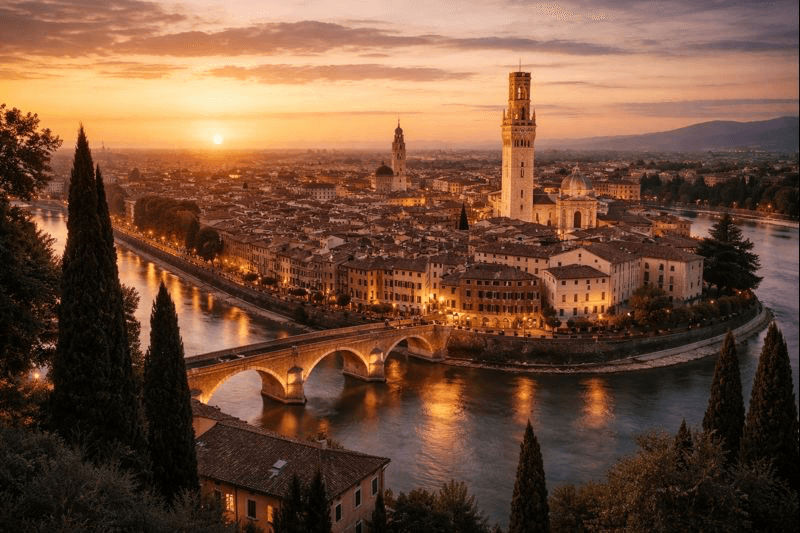
Visiting Verona in a single day is like flipping through the pages of a timeless novel.
With a simple walk, you can discover its most precious treasures: the squares that smell of history, the bridges that caress the Adige, the streets that resonate with art and poetry.
To truly enjoy every moment, the best way is to follow the recommended itinerary: the attractions are listed in order of distance from Teodorico Room & Apartment, so you can optimize your time and experience the city with absolute ease.
Our online guide will lead you step by step through the most iconic places and hidden corners that might otherwise escape you.
After all, Verona is not visited by car: it is lived slowly, walking, letting yourself be surprised.
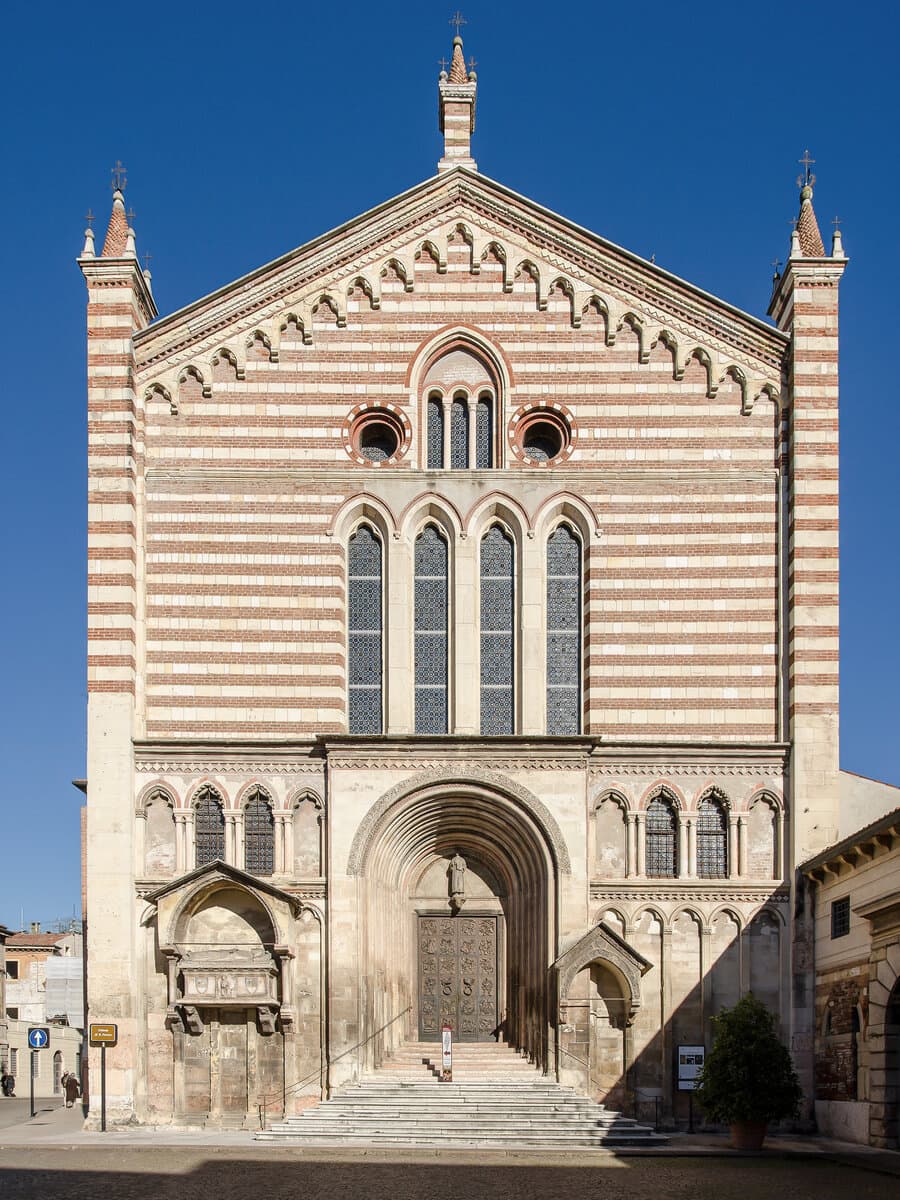
It is an original two-story construction built between 1065 and 1143.
From 1261, the upper church was rebuilt by the Franciscans who succeeded the Benedictines; the work was completed around 1350.
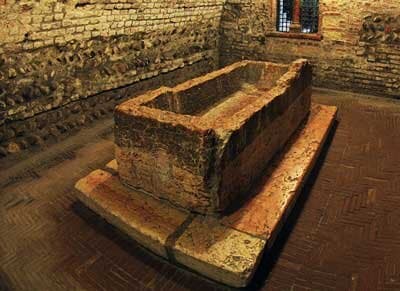
Tradition and imagination have it that this is the burial place of Juliet Capulet, the protagonist of William Shakespeare's Romeo and Juliet.
The appearance of the place, as we see it now, dates back to 1937 when the director of Verona's museums, Antonio Avena, who had also overseen the period restoration of Juliet's house, wanted to give an appearance closer to tourists' expectations to the place identified as the tomb of the Shakespearean heroine.
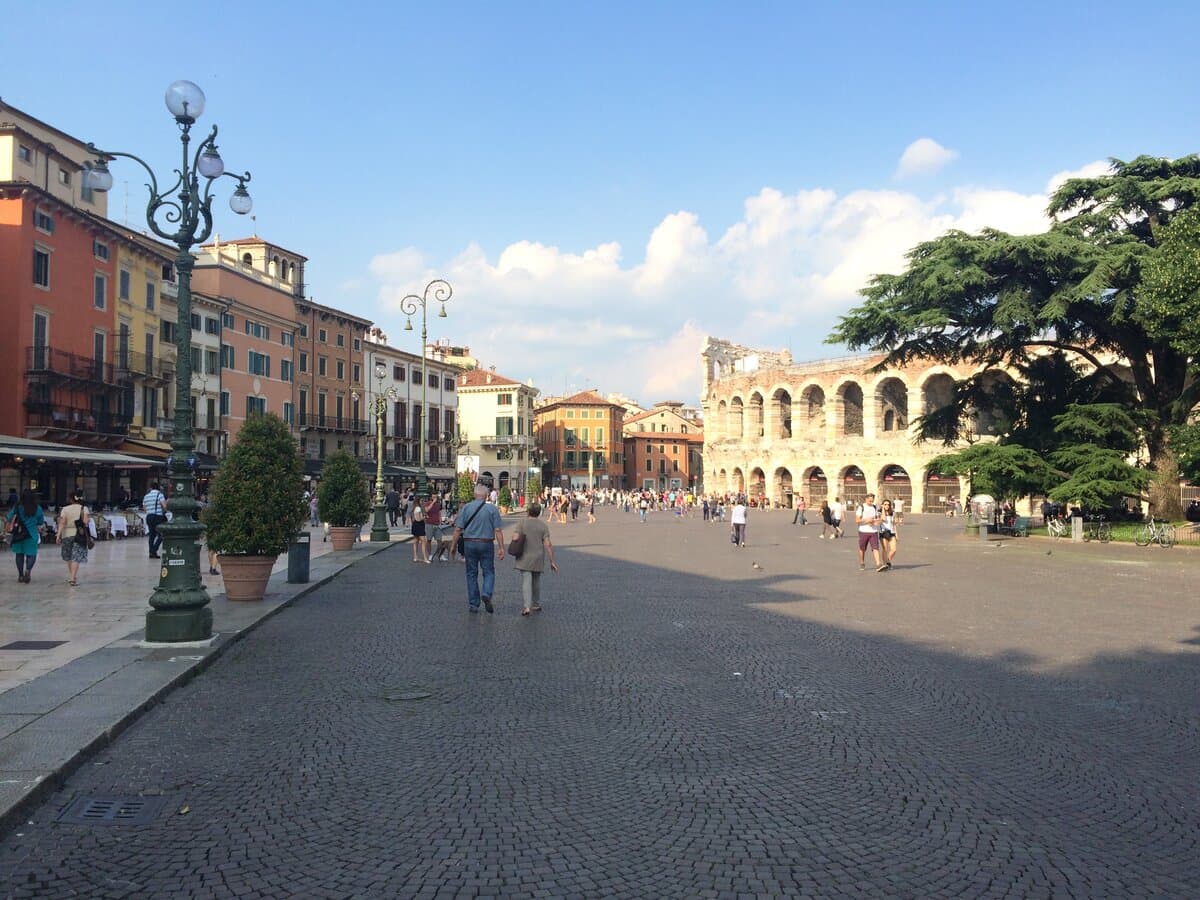
If you arrived by train or bus, you will enter from the south via Corso Porta Nuova passing under the Portoni della Bra.
Continue along the Liston, the sidewalk that surrounds the square, and you can see the Arena of Verona, the Palazzo della Gran Guardia and Palazzo Barbieri.
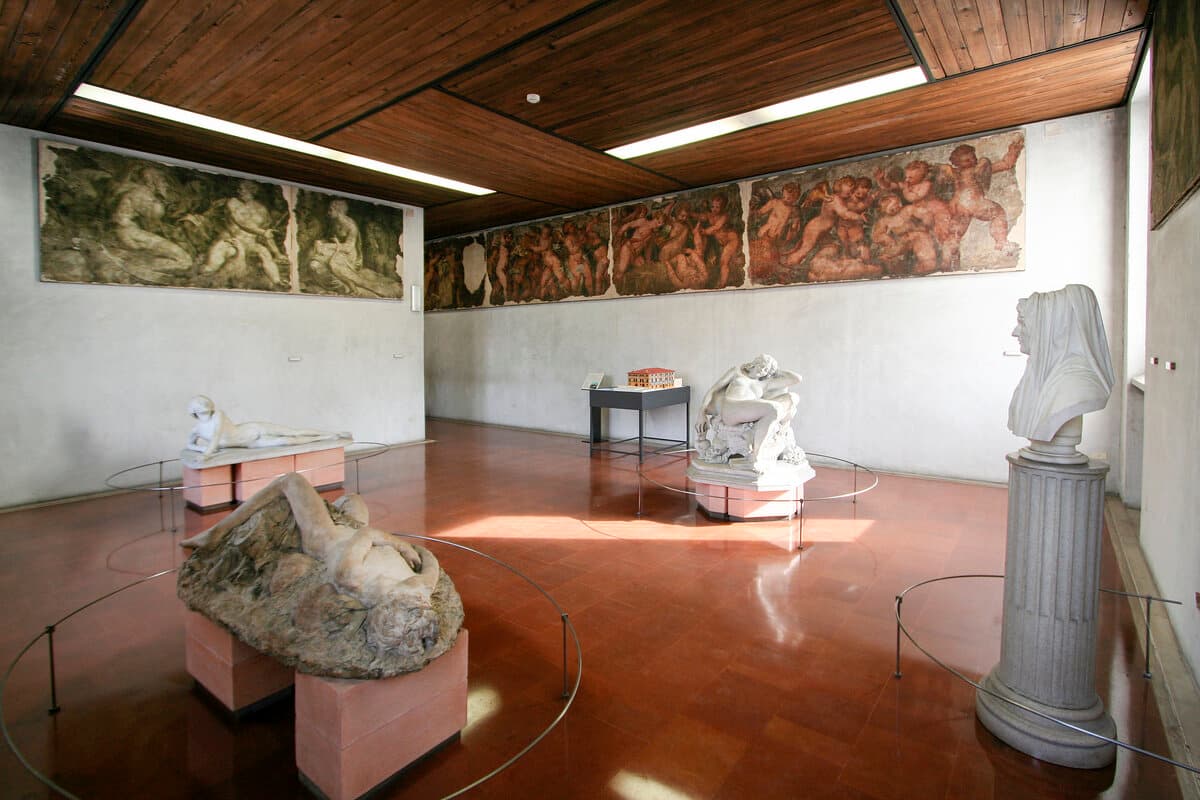
These mural artworks are an important cultural and artistic heritage, representing the rich artistic history of Verona over the centuries.
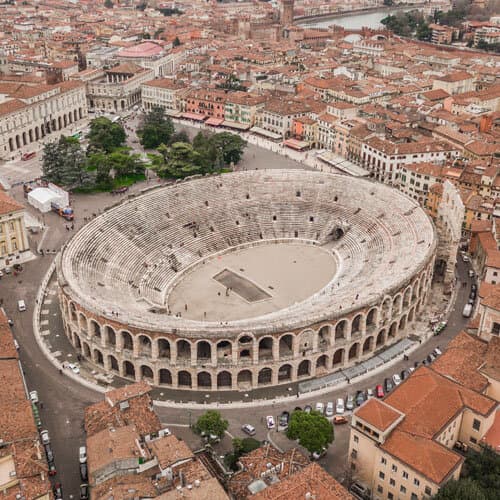
Built in the 1st century AD, it is one of the best preserved and most famous Roman amphitheaters.
It is definitely a must-see for music and culture enthusiasts. Every year, the Arena Opera Festival is held in this magnificent open-air venue, attracting enthusiasts from all over the world. In addition, many concerts by Italian and international artists and bands take place here.
Continuing on foot towards the north, to the left of the Arena, you will find Via Giuseppe Mazzini, Verona's shopping street; walk along it entirely and you will arrive at Piazza Erbe.
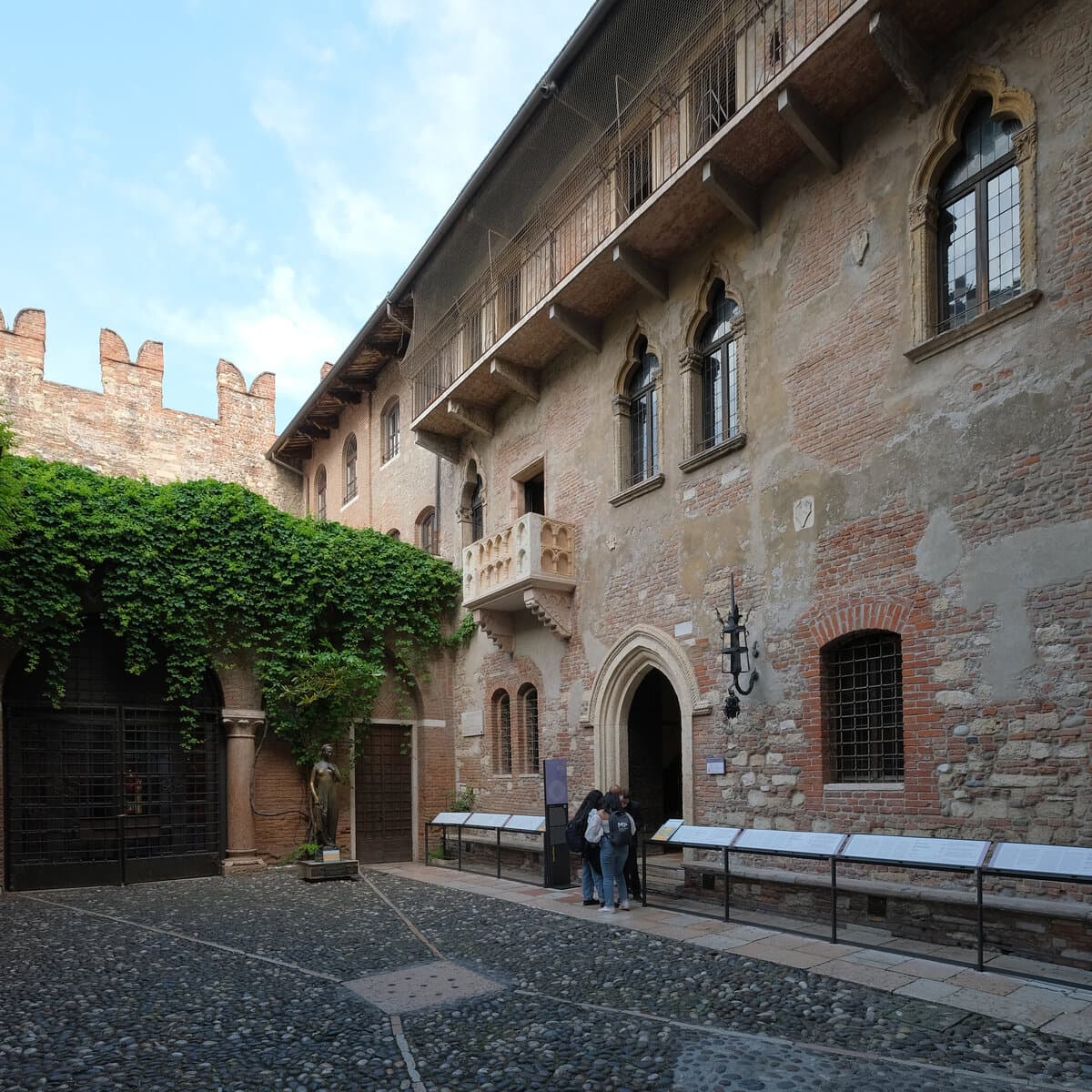
Visitors often leave love messages attached to the courtyard walls, making the atmosphere even more evocative.
Inside the house is a museum displaying costumes and objects related to the numerous theatrical and film performances of Romeo and Juliet. Juliet's House is definitely a must-visit for anyone visiting Verona who wishes to immerse themselves in the romantic atmosphere of Shakespeare's story.
A fun fact: according to popular belief, touching the right breast of the bronze statue of Juliet Capulet in the inner courtyard brings good luck in love.
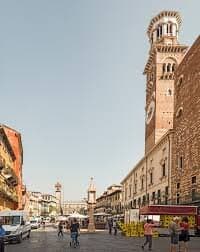
Here time seems to overlap different eras: the painted facades of medieval houses, the Renaissance loggias, the Torre dei Lamberti rising with elegance, the Madonna Verona fountain that for centuries has watched passersby, merchants and travelers.
During the day the square fills with the aromas of fruit, flowers and spices, the chatter of market vendors and the fading light on the historic buildings. At sunset it lights up with warm and intimate tones, while in the evening it transforms into a cozy parlor of tables, glasses of wine and typical Veronese dishes.
But Piazza delle Erbe is not only beautiful: it is alive, lived-in, everyday and at the same time noble. It is the place where you feel the soul of Verona most strongly, suspended between Rome and the Renaissance, between tradition and wonder.
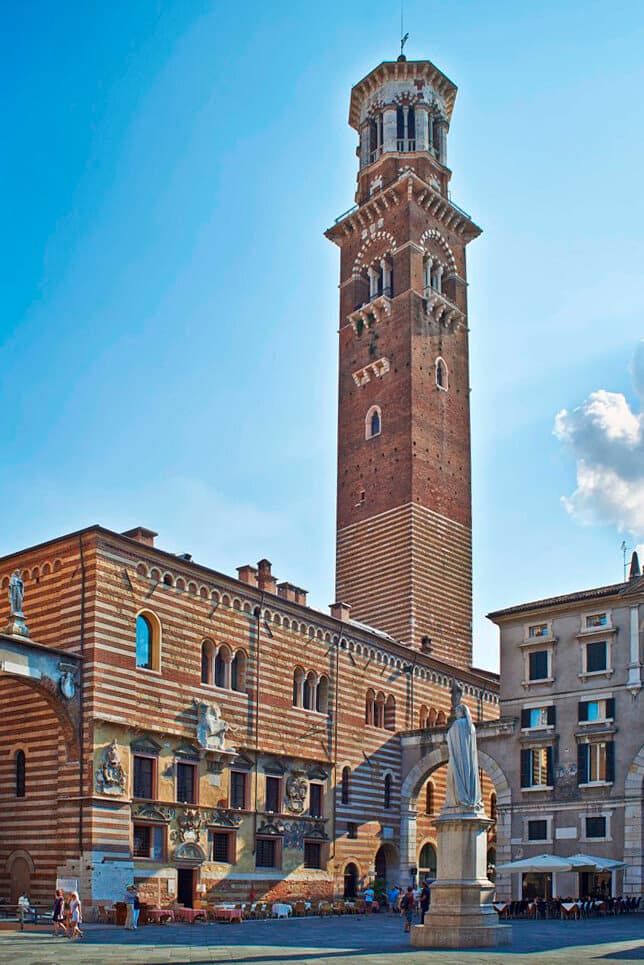
Built in the 12th century and subsequently expanded and restored over the centuries, today it is a wonderful testimony to the city's past.
Its height of about 84 meters makes it one of the tallest towers in Italy and a true icon of the Scaliger city.
Today you can climb its steep steps to reach the top, from where you can admire a spectacular panorama of Verona and its surroundings.
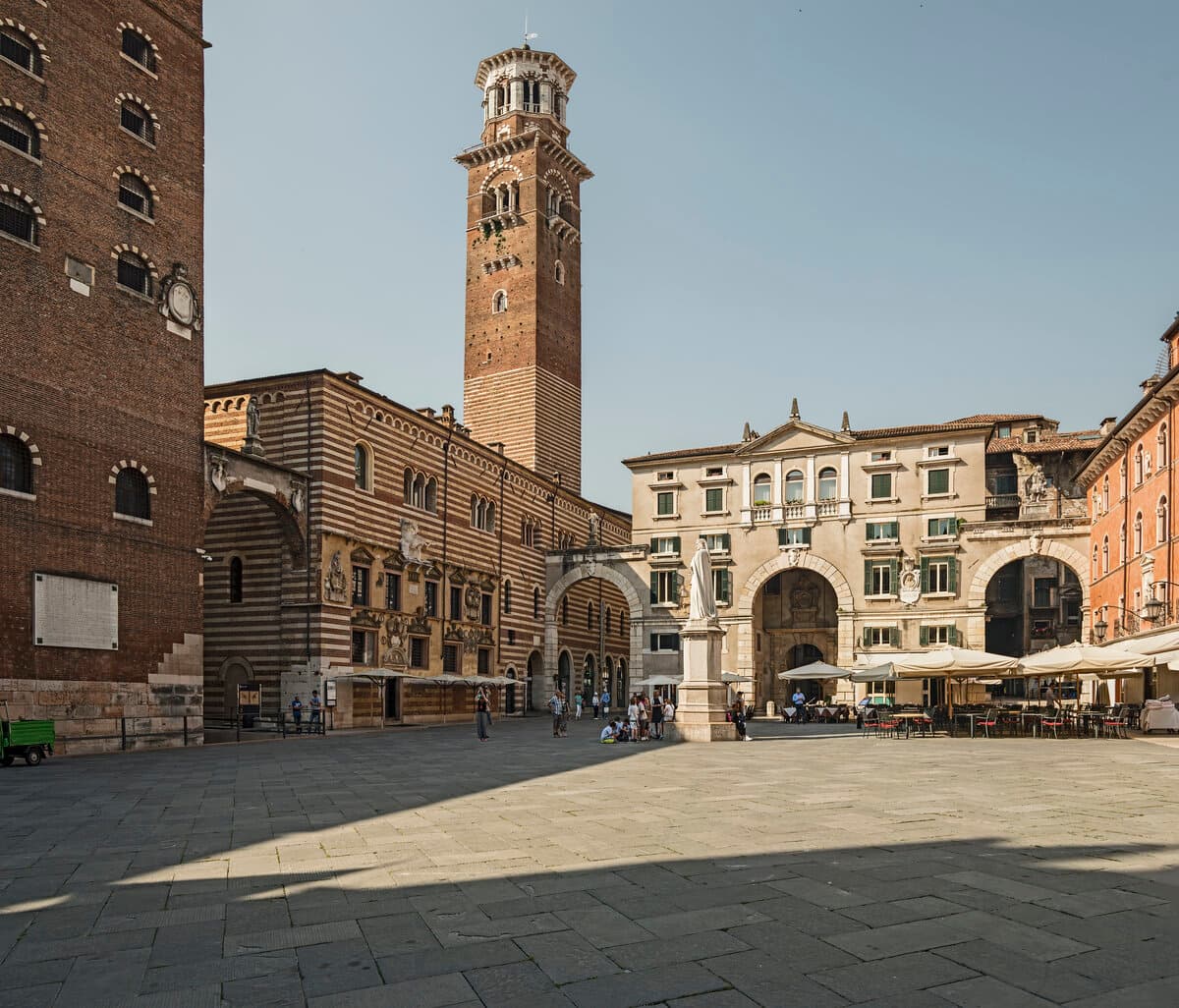
This historic building with imposing medieval architecture houses a large internal hall with a magnificent vaulted ceiling.
In the past it was used as the city's courthouse, while today it is home to the Achille Forti Gallery of Modern Art. Where once important decisions were made, now you can admire works by authors such as Hayez, Guttuso and Casarini, as well as temporary exhibitions.
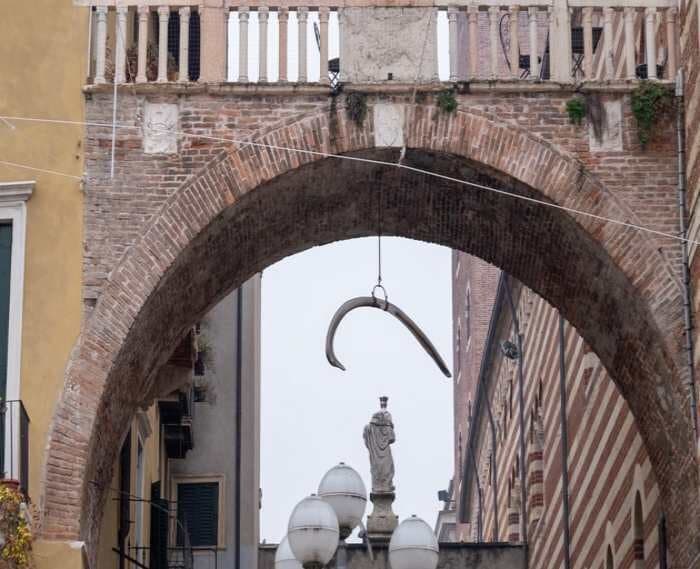
In Piazza delle Erbe, after the Case Mazzanti, we find the Arco della Costa, a structure that serves as a walkway connecting this square with Piazza dei Signori.
Hanging from the arch is a singular object, whose origins are still shrouded in mystery. There are numerous hypotheses about it.
First, it could be a whale rib or that of a marine reptile called an ichthyosaur, a relic brought by the Crusaders from the Holy Land and hung as an ex-voto symbol.
The legend around this object is very peculiar: it is said that when a person who is honest and pure of heart passes under it, the rib will fall.
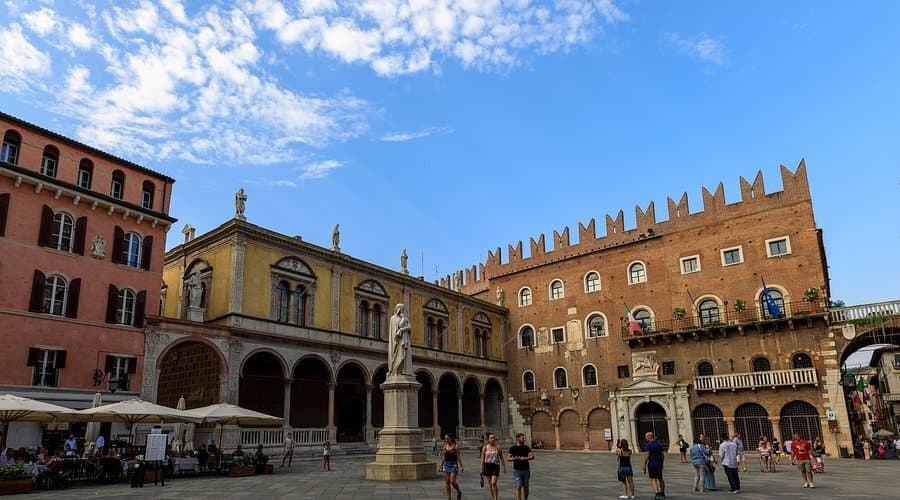
These include the Domus Nova, where the Venetian judges resided, the Palazzo degli Scaligeri, the Palazzo del Capitano and the Loggia del Consiglio.
In the center stands an equestrian statue of Dante Alighieri, the famous Italian poet.
It is undoubtedly a fascinating place that reflects the rich past of Verona.
Anyone wishing to admire culture and immerse themselves in Verona's history and architecture cannot miss a visit.
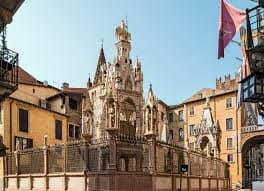
This monumental complex was built to commemorate the Scaliger dynasty that ruled the city during the medieval period.
Here lie buried various members of the Scaliger family, such as Mastino II and Cansignorio.
Cangrande I, one of the most famous members of the dynasty, also rests in this place.
The Scaliger Tombs are an extraordinary example of Gothic architecture with intricate and detailed elements that make them a landmark for art lovers.
Also noteworthy is the nearby church of Santa Maria Antica.
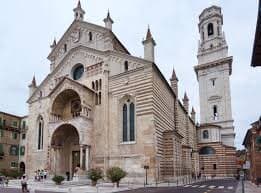
The facade of the Duomo is particularly remarkable, adorned with sculptures and decorations representing biblical scenes and religious symbols. The interior of the cathedral houses numerous artworks of notable historical and cultural value.
Inside the Duomo, sacred relics and precious liturgical objects are also kept.
A short distance from Piazza Erbe, if you pass under the Arco della Costa, you will find yourself in Piazza dei Signori, also known as Piazza Dante.
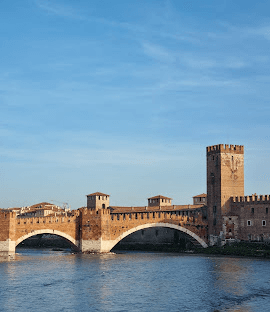
Built in the 14th century at the behest of Cangrande II della Scala, the bridge had both a strategic and defensive function: it allowed a quick escape route from the castle to the countryside in case of revolts. This military origin can still be perceived today in its severe lines, Ghibelline battlements and the imposing use of red brick, typical of Scaliger architecture.
With its three asymmetrical arches—the central one, for centuries, was the largest masonry arch in the world—the bridge crosses the Adige with a solemn yet elegant presence. Walking across it means entering into a continuous dialogue between history, river and city: on one side the walls of Castelvecchio, on the other evocative views of the Adige and the rooftops of Verona.
Severely damaged during World War II, it was reconstructed stone by stone in the postwar period, recovering the original materials from the riverbed. An intervention that restored its authentic soul, making it today not only a historic monument but also one of the most romantic and photographed places in the city.
At sunset, when the warm light caresses the bricks and the Adige flows slowly beneath your feet, the Castelvecchio Bridge offers one of the most intense and memorable moments of a walk through Verona.
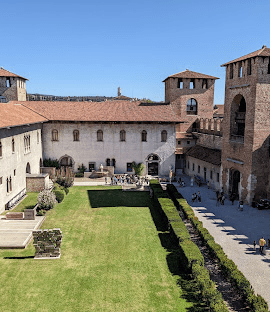
Inside, Castelvecchio today houses the famous Castelvecchio Museum, which contains one of the most important art collections in the Veneto: paintings, sculptures, ancient weapons, frescoes and medieval and Renaissance artifacts. The museum path is made unique by the intervention of architect Carlo Scarpa, who masterfully blended ancient and modern, transforming the castle into a masterpiece of contemporary museography.
Overlooking the Adige and connected to the Scaliger Bridge, Castelvecchio is not just a monument to visit, but a place to experience slowly: its silent courtyards, panoramic terraces and walkways on the walls offer evocative views of the city and an atmosphere suspended in time.
Castelvecchio is the point where history, art and architecture meet, offering those who visit it one of the most intense and authentic experiences of Verona.
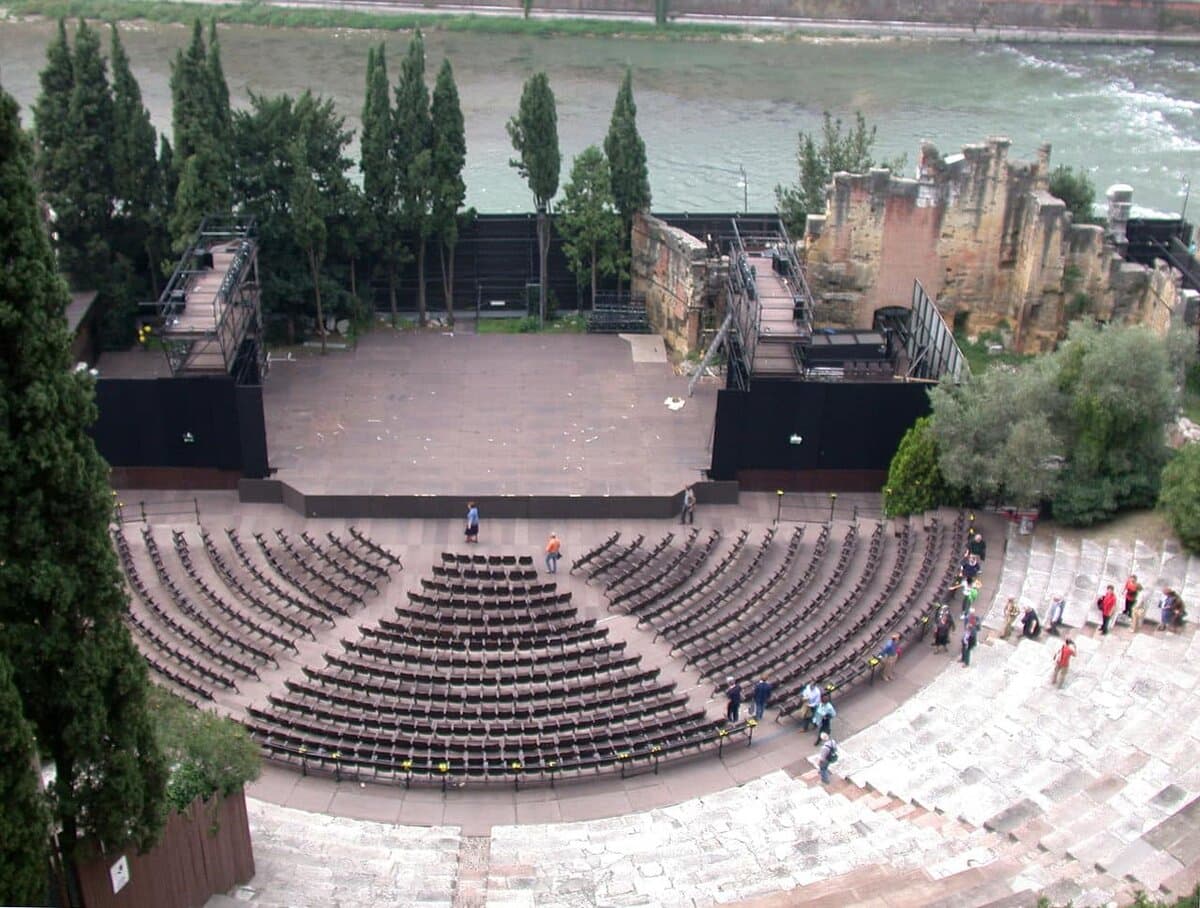
Built towards the end of the 1st century BC, it is one of the best examples of Roman architecture that has come down to our times.
During the Roman period, the theatre could accommodate thousands of spectators and was used for theatrical performances, concerts and other exhibitions.
It ended up being abandoned at the end of the Roman period and was only rediscovered at the end of the 19th century. After careful restoration, it returned to being a stage for summer concerts and shows highly appreciated by tourists.
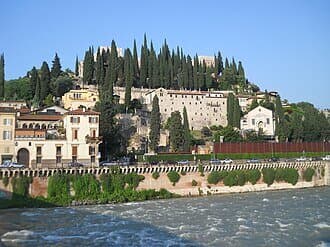
A hill that rises a few hundred meters above Verona's skyline, offering a unique panoramic view.
Here you can also visit the Church of San Pietro, an important historical and religious site that houses medieval frescoes.
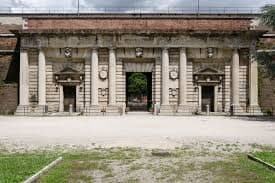
Its name is linked to a traditional palio on the occasion of which the gate was opened.
Generally, in fact, this access to the city was closed.
For this reason, the name given by the Veronese of the time was Porta Stupa, meaning closed.
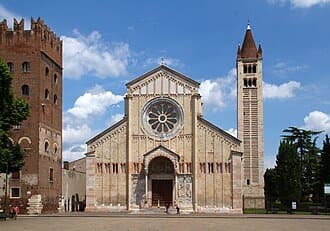
It houses the tomb of San Zeno, the patron saint of Verona, and is also known as the church of San Zeno Maggiore or church of San Zenone.
A remarkable example of Romanesque architecture, it is a true masterpiece of medieval architecture.
The basilica is famous for several distinctive elements and its tall bell tower, a majestic structure that dominates the panorama of Verona.
The bronze doors of the basilica, considered among the most important works of Romanesque art in Italy, are rich in carved details. Inside the church is a cycle of frescoes depicting religious scenes and stories from the life of San Zeno, patron saint of the city.